

What is PS or Postscript?
PS is originally derived from the Latin word, post scriptum, which translates to “written after.” In English, PS stands for postscript.
The existence of postscript comes from pre-internet days when people sent handwritten and or typed letters to one another. Postscripts were added after the initial letter was composed as an after thought.
At the advent of the internet, email began taking over as the common medium for correspondence. And with that ushered in a wave of new communication etiquette, abbreviations, and short form. Despite technology enabling writers to easily modify their letters, the postscript survived unscathed. People now use postscripts in their emails in a similar fashion as they did in written letters.
How to use PS?
Including a postscript in a correspondence is very simple. First, compose your letter or correspondence as you normally would. Next, sign off with your “Thank you” or “Sincerely.” Finally, insert your postscript by stating “PS.” followed by what you want to add.
For example:
Dear Robert,
Thank you again for sending over the finalized project schedule and valuation. I will review this with the team and get back to you with our comments.
Kind regards,
Sienna Robinson
PS, How did the you like the restaurant recommendation? I know a few other seafood spots for the next time you’re onsite.
Another example of how to use PS in a letter:
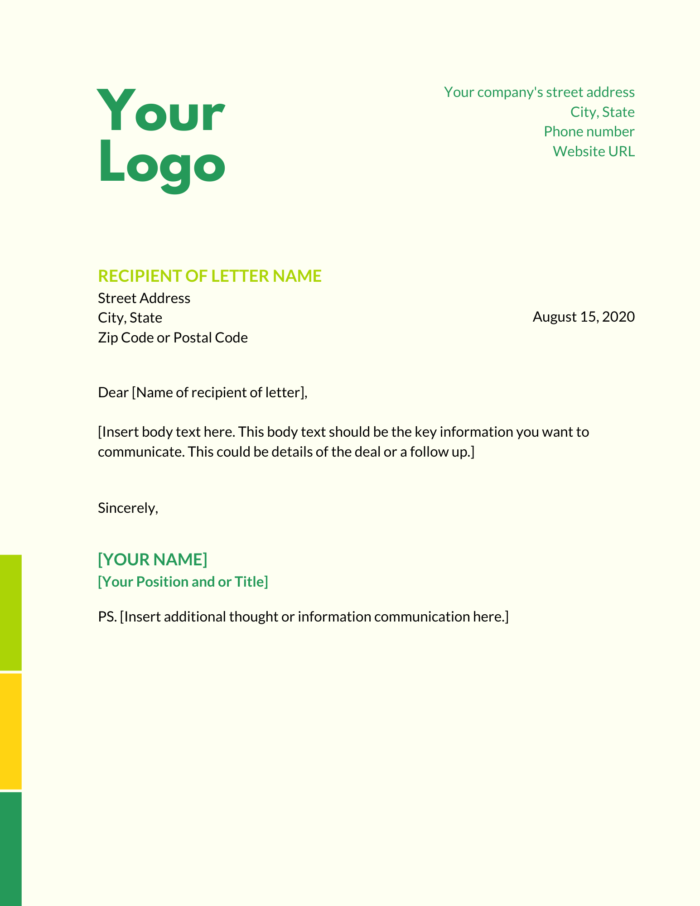
If need be, additional postscripts can be inserted after the first one. This is done with an abbreviation of PPS, which stands for post postscript. Many people make the mistake of writing “PSS” rather than “PPS.” Avoid looking foolish (and ignorant) – ensure you use the correct abbreviation in your writing.
Benefits of PS in emails
With our new normal of working from home and digital coffee chats, postscript can be a powerful tool for developing relationships with coworkers and clients. While Zoom meetings are becoming common, email still reigns as the communication tool for business. Using a post can help evolve casual conversations that spill over from other meetings.
In particular with the new remote world of work, using postscripts as a way to learn more about your colleague or client can help build a bond. For example, if you are emailing your client to follow up with a contract or a quote, you can include a PS to ask about a recent vacation they took or a restaurant they tried. This is a great way to build rapport with the client as it opens up the conversations to other items outside of business.
Other uses for postscript
In addition to building informal relationships with distant colleagues, there are other uses for PS. For email marketing campaigns, PS can be used to offer additional information related to the email content, make a final plea, or create a sense of urgency.
For example, a case study ran by Marketing Sherpa found that direct-email campaigns that use a PS followed by a donation link were effective in raising funds. Email marketers report that when PS is used in an email, it is an effective call to action.
Another consideration for why individuals should use PS is the length of the correspondence. Readers may only read the beginning and end of a letter, skimming over the rest of the body. With the PS standing out, it is more likely to capture the readers’ attention. Thus using a PS is a great way to reinforce the message to the reader.
Key takeaways
- PS or postscript comes at the end of a letter or email, after the writer signs off.
- In a world where we will continue to work remotely, PS can be a powerful tool for developing informal relationships with colleagues and clients.
- For email marketing, PS can be used to create a sense of urgency and garner action from the reader.
Related Readings
Professional Leadership Institute (PLI) is an educational website providing professionals from all types of businesses with practical education in human resources and leadership. To keep evolving your leadership toolkit, additional PLI resources below will be useful: